
1. Universal Order
The universe displays an extraordinary degree of order, structure, and mathematical precision. The same physical laws operate consistently throughout the universe, allowing scientists to describe and predict the behavior of planets, stars, atoms, light, and other physical phenomena.
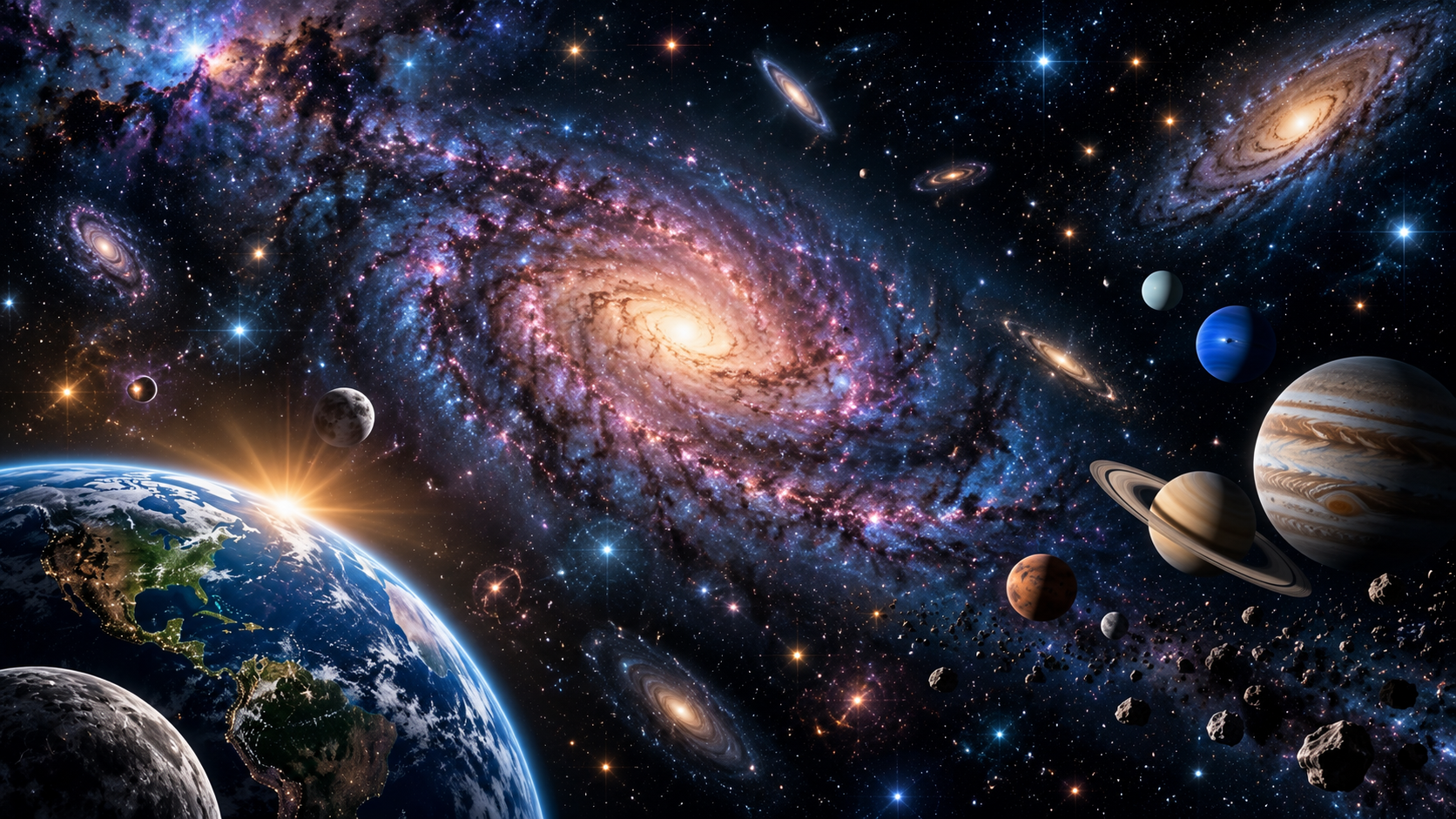
For example, scientists can calculate the movements of planets and predict eclipses and tides. This raises an important question: Why is the universe governed by consistent mathematical laws that can be discovered and understood by human beings? The remarkable order and predictability of the universe are consistent with the existence of an underlying intelligence or Creator.
2. Life Comes From Life
There is absolutely no evidence for life coming from non-living matter. It has not been done in any scientific experiment nor has it ever been observed.
So, has science ever observed non-living matter becoming life?
The answer is no—not even once.
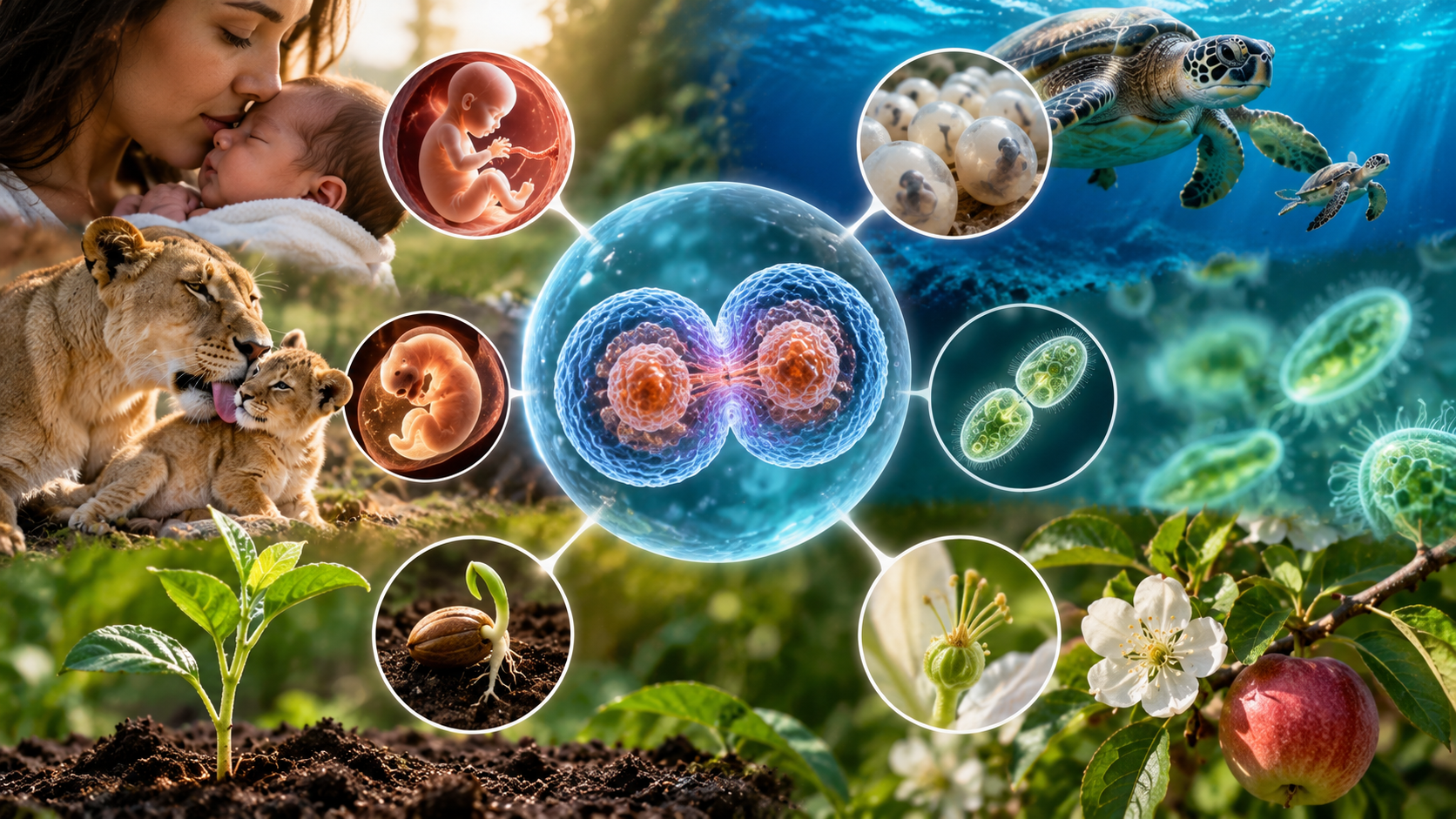
Every living organism we directly observe comes from pre-existing life. Humans come from humans, animals come from animals, plants come from plants, and so on.
Despite extensive scientific research spanning centuries, there is no proven or verifiable evidence showing that non-life has ever produced life.
Life coming from non-living matter is not a scientific fact, or any type of proven fact at all.
3. DNA
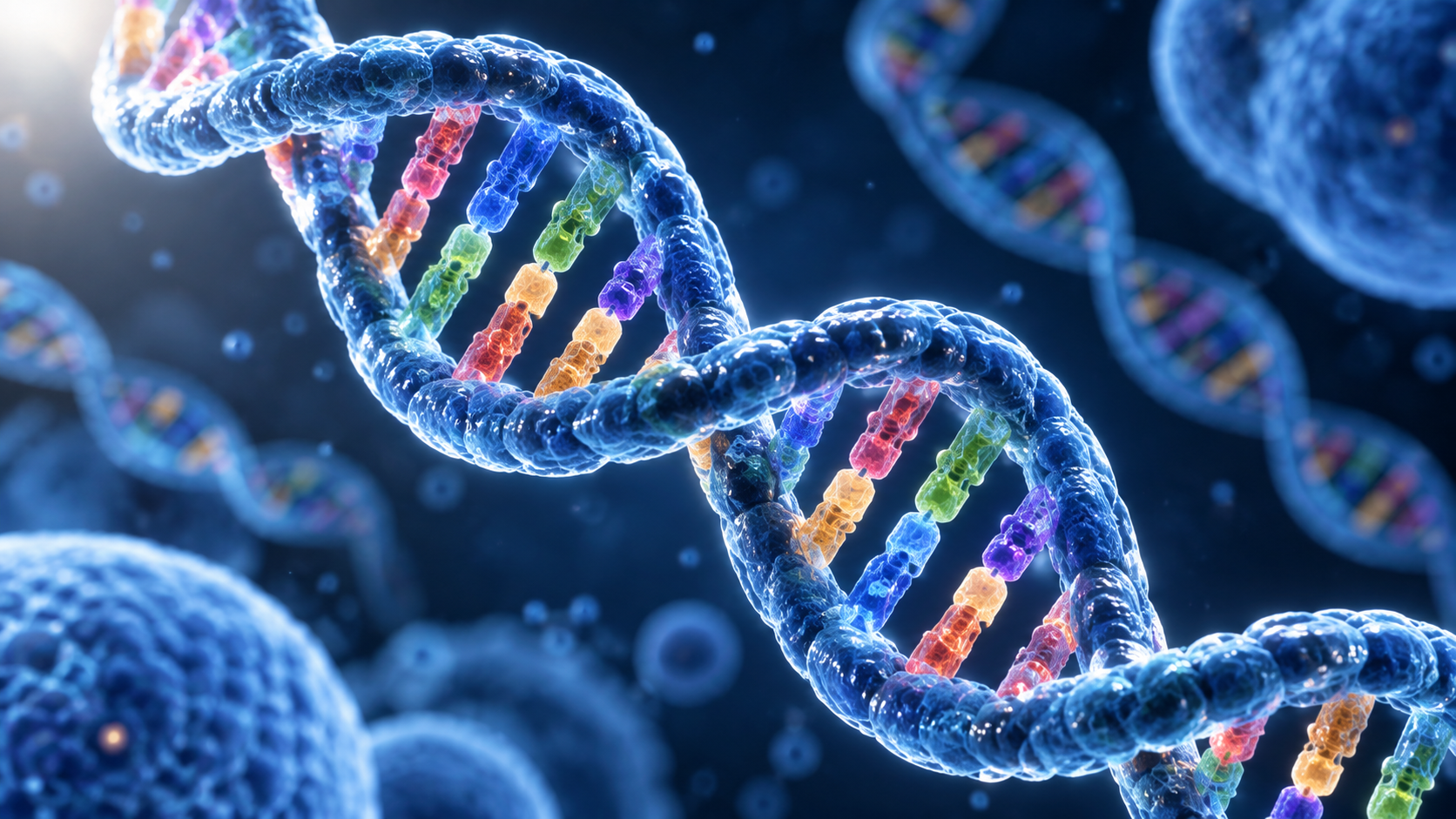
Think about your body for a moment. Every one of your cells contains DNA, a microscopic set of instructions that helps tell your cells how to build and operate your body. The amount of information packed into DNA is incredible. The human genome
contains about 3 billion pairs of DNA letters. Since each pair has two letters, that's about 6 billion individual letters in one complete set of human DNA. Most of your body cells have two sets, meaning they contain roughly 12 billion individual DNA letters.
And these letters aren't just randomly thrown together. Their order matters. Just as changing the letters in a sentence can change its meaning, the sequence of DNA letters carries biological information that cells use to make proteins and perform the many tasks necessary for life.
But there's something even more remarkable: a living cell isn't simply a bag of chemicals. Inside every cell are thousands of different molecular parts that have to be organized, coordinated, and working together for the cell to function, survive, and reproduce.
For someone considering the evidence for a Creator, the enormous amount of information in DNA, the remarkable organization of living cells, and the fact that the origin of life remains an unanswered scientific question can provide a reason to consider whether intelligence played a role in the origin of life.
4. The Human Body
The human body provides another example of extraordinary organization.
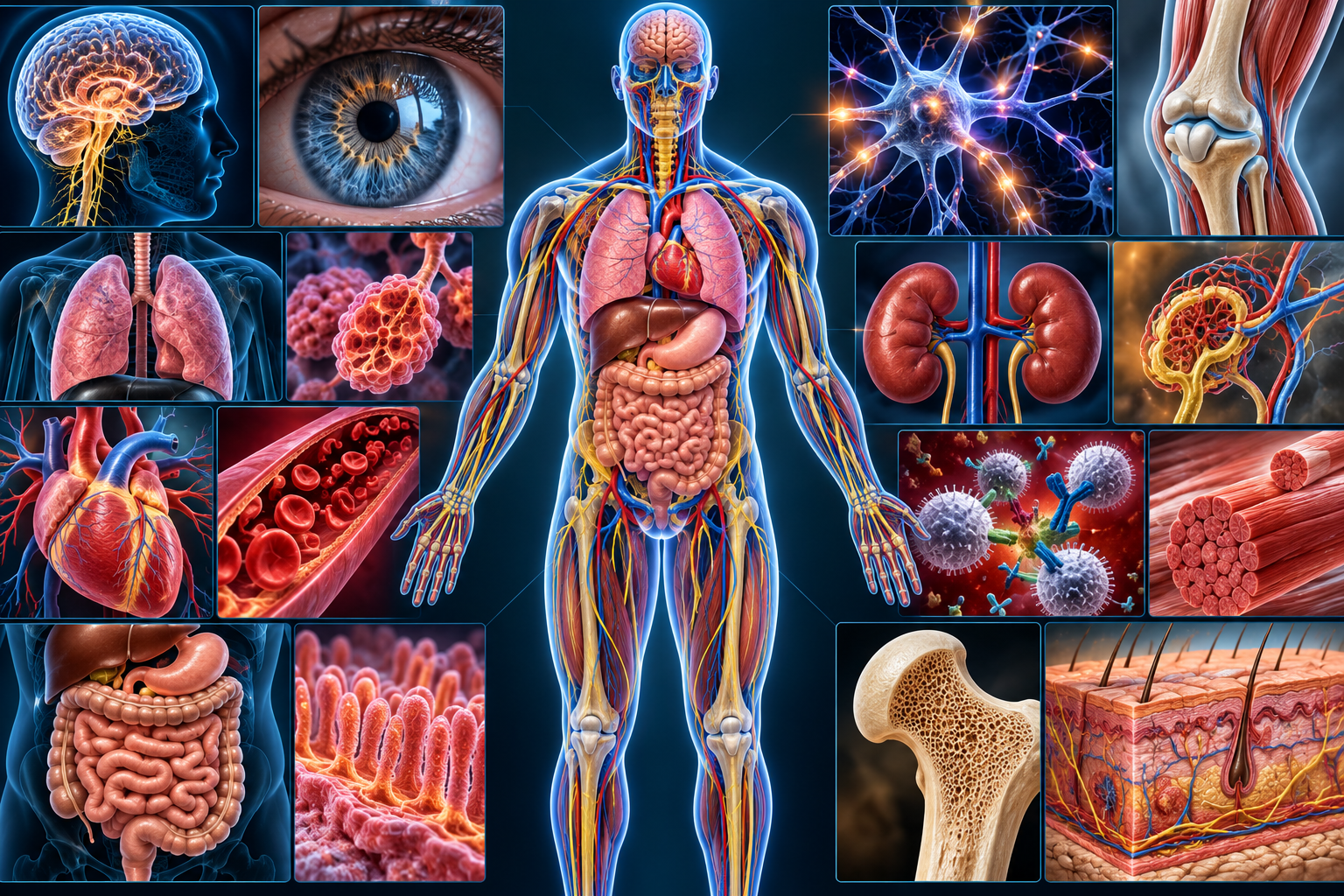
It contains 11 major organ systems, including the nervous, circulatory, respiratory, digestive, immune, skeletal, muscular, urinary, endocrine, integumentary, and reproductive systems.
These systems don't work independently. They operate simultaneously and continuously, communicating and depending upon one another.
Your lungs bring in oxygen. Your heart distributes it. Your blood carries nutrients. Your kidneys regulate the chemistry of your blood. Your nervous and endocrine systems coordinate countless processes. Your immune system monitors for threats. And all of this continues while you are sleeping and completely unaware of most of it.
5. The Overall Argument
The argument follows a consistent pattern:
The universe → displays mathematical order and predictable laws.
Life → is known to come from pre-existing life, while no direct evidence has demonstrated non-life producing life.
DNA → contains extraordinary biological information and instructions.
The human body → consists of multiple complex systems working together simultaneously.
Science can explain many aspects of how these things work. But the deeper question remains:
Why does the universe contain such remarkable order, and why does life contain such extraordinary organization and information?
The evidence does not constitute a scientific proof of a Creator in the strict experimental sense. But the mathematical order of the universe, the absence of an observed non-life-to-life transition, the information contained in DNA, and the extraordinary coordination of living systems provide a rational basis for considering whether an intelligent Creator is the best explanation.